

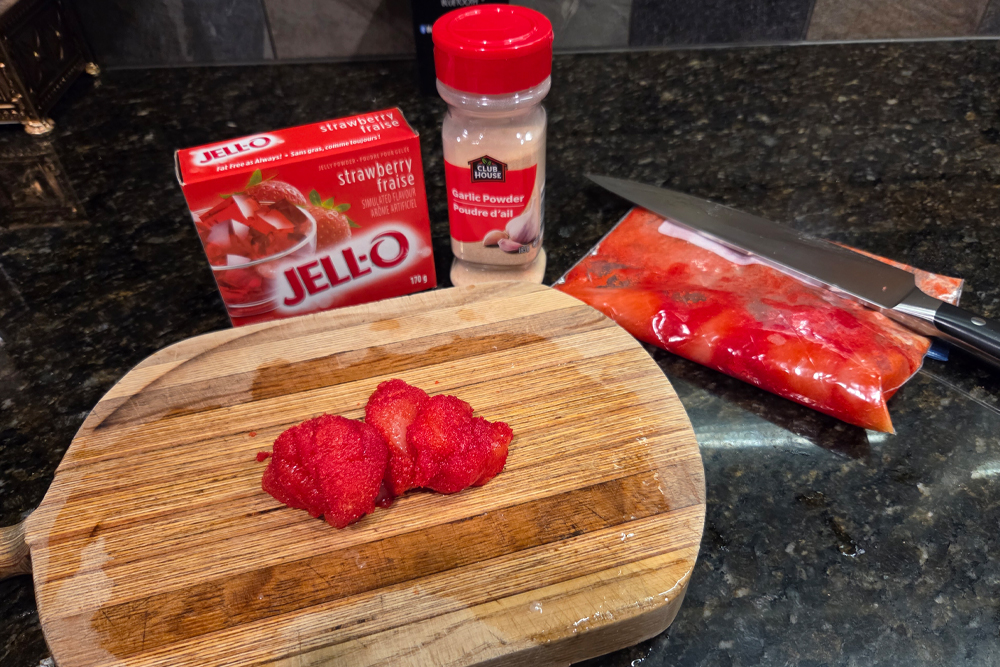
Chicken breast, Jell-o and garlic powder, a surprising bait combination
that will often catch catfish, no just in a pinch but anytime other baits run short
From Fresh to Frozen: Winning the Catfish Bait Game
Story and photos by Brad Durick
In the world of catfishing there is one challenge that stands out universally no matter where you live and fish, and that is bait. Talk to any serious catfish angler, whether a tournament angler, guide or hardcore weekender, and they all mention that staying in good bait is a major key to success. Because of this, there has been an entire industry created to try to make life easier.
Bait shortages seem to be a huge factor for some. This author, who is lucky enough to purchase bait, has seen a trend toward bait shortages for over 15 years. It used to be you could go to the bait shop most days and get white suckers for catfish bait. Now due to demand and storage issues, the delivery truck comes about every 10 days, and you better have a way to store the bait.
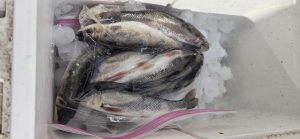
In other areas of the country where anglers must catch bait, there have been noticeable shortages in certain areas, meaning catfish anglers are driving many hours to find the baitfish they want to catch.
To add even more difficulty to this trend, states have enacted aquatic invasive species laws restricting the movement of baitfish over state lines and even from one body of water to another.
Fresh is Best
When speaking to catfish anglers from around the country, one saying with bait is common. Fresh is best. Many guides get out early with their cast nets to catch and ensure they have bait for the day.
Tennessee River guide Capt. Aaron Massey says he always tries to have fresh bait available for his customers because it is the very best. Due to time and travel for bait, sometimes he puts bait on ice for a day or two as needed to maintain freshness.
Capt. Richard Simms, guide and CatfishNOW writer, echoes this “fresh is best” sentiment.
Frozen Bait
Frozen bait is a necessary evil to most catfish anglers. No one wants to waste bait, and sometimes you are desperate and need bait to get through. Most catfish anglers will freeze leftover bait at the end of a trip to prevent waste and keep bait for those times when there simply is no other option around.
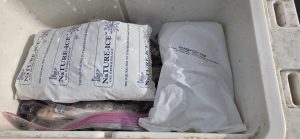
I try hard to never freeze bait, but sometimes it is the only option to not waste expensive bait that has died before it can be used. Sometimes, in case of a shortage, the bait in the freezer is the bait one has to use based simply on availability. Both Tennessee River captains agreed on this use of frozen bait when they get in a pinch.
There is a time when fresh frozen will work and sometimes better than fresh or aged dead. That is when water temperatures are over 81 degrees. The logic here is that the heat of the water will diffuse the scent of the bait quicker than cooler water. A frozen piece of bait will take a moment to thaw, creating a longer scent trail.
Chicken Bait?
I first heard of using chicken for catfish bait from Mac Byrum, a guide at Lake Norman, North Carolina in 2011. I made fun of it for 14 years before finally giving into trying it while in a bait pinch in 2025.
My friend, my son and I were in a bait pinch for a body of water we were fishing and were going to be unable to collect frogs (our bait of choice for this location this time of year) until the next morning after we arrived. To get through the first afternoon, we bought some frozen fish that is legal for bait and some chicken breasts at the grocery store.
It was one of those “nothing to lose” times, and we were just hoping to catch a fish. All three of us avoided it until I finally “took one for the team” and put it on my hook. To make a long story short, we caught a lot of fish on that trip and never did go get those frogs.
Capt. Simms stated that chicken is one of his go-to baits on home waters and that channel catfish especially love it. He likes using it for slow drifting and trolling, having the chicken breast cut into strips to provide a little added action.
Capt. Massey dittoed this, going further to say the chicken cut into strips seems to mimic how mussels look and probably has the same consistency as a mussel.
Aged Bait
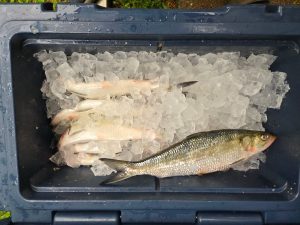
Both captains when asked about aged bait said they didn’t use it other than to throw some extra on ice for a day or two. Neither could answer if the aged bait worked better or worse than the same bait when fresh, nor had they thought much about it. Massey did mention that he will pack skipjacks on ice for a few days and always packs them on ice upside down for better results.
Over the past three years, I have spent much time experimenting with aging fresh bait. This is killing the bait, putting it in a bag and packing in ice for future needs. It appears that channel cats prefer 48- to 72-hour dead bait better than fresh cut. My thinking is when you cut a live baitfish, most of the blood leaks onto the cutting board. When dead and packed in ice, the blood soaks into the meat of the fish, creating a greater scent trail.
I have experimented with bait up to 16 days dead. It seems that two to six days dead is the best before the bait gets soft and degraded to the point it won’t stay on the hook.
Bait is always an issue, and there are many more potential catfish baits that can be used for success. This article just touched on some of the new (and old in some places) ideas about bait that may give you a leg up the next time you get out.
(Capt. Brad Durick is a nationally recognized catfish guide on the Red River of the North, seminar speaker and author of the books “Cracking the Channel Catfish Code” and “Advanced Catfishing Made Easy.” For more information, go to www.redrivercatfish.com.)
