

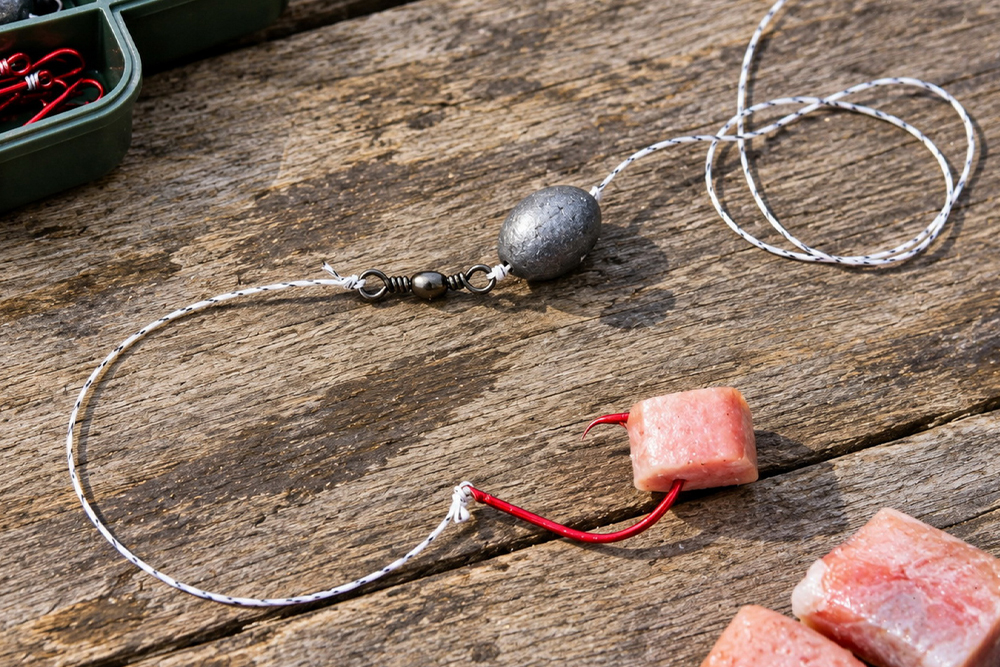
A simple slip-sinker rig is one of the most versatile setups a beginning catfish
angler can learn. Understanding how the sinker, swivel, leader and hook work
together is the first step toward building confidence on the water.
Catfish Basics: Getting Your First Catfish Rig Right
Story and photo by Keith “Catfish” Sutton
One of the first things a beginning catfish angler must learn is how to rig a fishing line properly. You can have the best bait in the world, fish in the right place and use quality equipment, but if your rig isn’t suited to the conditions, catching catfish can become a frustrating experience.
Fortunately, you don’t need a tackle box full of complicated rigs to get started. A few basic components and a little know-how will put you in the game.
Start With a Slip-Sinker Rig
One of the most versatile setups for beginning catfish anglers is the slip-sinker rig. It’s simple to assemble, works well in lakes and rivers, and allows catfish to pick up bait without immediately feeling the full weight of the sinker.
To make one, slide an egg sinker onto your main fishing line. Next, tie on a barrel swivel. The swivel stops the sinker from sliding down to your hook and provides a connection point for a short leader. Tie a 12- to 24-inch leader to the other end of the swivel, then attach a suitable hook.
That’s all there is to it.
When a catfish picks up the bait and moves away, the line slides through the sinker rather than pulling the sinker along. This can help reduce resistance and give the fish time to take the bait.
Choose the Right Sinker
Sinker weight depends largely on where you’re fishing. In a farm pond or calm lake, a small sinker may be all you need. In a river with a strong current, you’ll need more weight to keep your bait where you want it.
Use just enough weight to hold the bait in position. An unnecessarily heavy sinker can make casting more difficult and may cause your rig to become snagged more often.
Don’t Overlook the Hook
Hooks come in many shapes and sizes, but beginners should concentrate on two popular choices: J-hooks and circle hooks.
J-hooks require the angler to set the hook when a fish takes the bait. Circle hooks are designed to catch in the corner of a fish’s mouth as it moves away with the bait. With circle hooks, resist the urge to jerk the rod sharply. Instead, reel steadily until the line comes tight and the rod loads.
Choose a hook large enough to accommodate your bait and strong enough to handle the catfish you’re pursuing. A hook that’s too small may not penetrate properly, while an oversized hook can make presenting smaller baits difficult.
Match Your Rig to Your Fishing Conditions
No single rig works perfectly everywhere. If you’re fishing around brush, rocks or other underwater obstructions, a shorter leader may help reduce tangles. When fishing open water, a longer leader may allow your bait to move more naturally.
Check your knots regularly, especially after catching a fish or dragging your rig across rough bottom. Retie whenever you notice fraying or damage.
Most importantly, practice assembling your rig at home before heading to the water. Once you’ve tied it a few times, you’ll be able to put one together quickly when you’re fishing.
A good catfish rig doesn’t have to be complicated or expensive. Learn the basics, make adjustments to suit the conditions, and spend more time concentrating on what really matters: finding catfish and putting a tempting bait where they can find it.
(Keith “Catfish” Sutton writes about catfishing every day from his home in Alexander, Arkansas. Books he’s written about the sport are available on his website, www.downhomearkansas.net
