

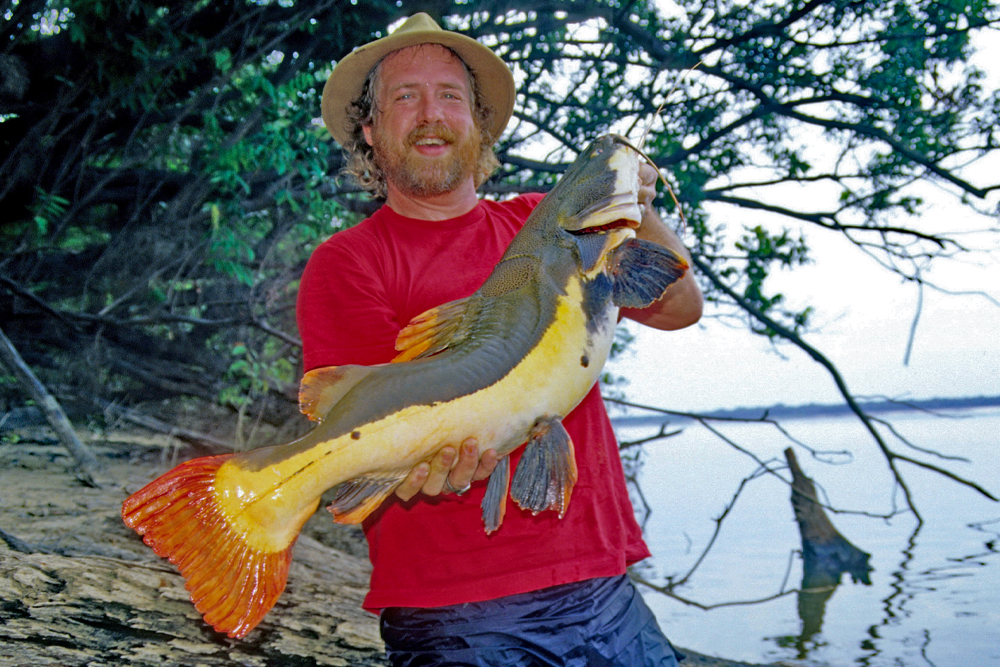
Sutton captured this beautifully colored redtail catfish in
Brazil’s Rio Negro. It was just one of the species often caught
by Sutton as he pursued his lifelong passion.
An International Catfish Man of Mystery
by Capt. Richard Simms
Photos courtesy of Keith Sutton
Most know Keith Sutton perhaps as the editor of CatfishNOW, or as one of the most accomplished anglers and writers in the country. With five books on crappie and catfishing under his belt, he’s also penned millions of words for various outdoor magazines and other publications.
But after hearing more about his travels to other continents in pursuit of catfish, I also consider him—cue the James Bond music—an “International Catfish Man of Mystery.”
It all began at the edge of an Arkansas farm pond decades ago.
At 10 years old, Sutton caught a catfish that changed his life. It wasn’t the biggest catfish he would ever catch. It wasn’t caught in an exotic river thousands of miles from home. And it certainly wasn’t a fish that would make the record books. It was a channel catfish caught from his Uncle Pat’s pond.
“I grew up in a small rural town in northeast Arkansas where the outdoors was simply part of everyday life,” he recalls.
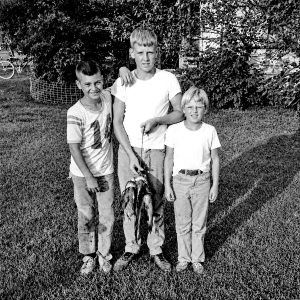
His father wasn’t around, but Sutton was fortunate to have a village—teachers, preachers, uncles, cousins, family friends and especially his own grandmother—who introduced him to the outdoors.
“They each taught me something different, whether it was how to find squirrels in the hardwoods or where the catfish were likely to bite,” he says.
After stocking his pond with channel catfish, Uncle Pat kept it off limits while the fish grew fat on commercial fish food. When Uncle Pat finally invited all his nieces and nephews to fish the pond, he probably had no idea he was opening a door for Sutton that would never be closed.
On opening day, Sutton, his sister and cousins lined the bank with long cane poles.
“Almost every baited hook was inhaled the moment it hit the water,” he remembers.
The channel cats weighed as much as 10 pounds.
“Until then, most of us had never caught anything larger than a bluegill, so every fish felt like a monster,” Sutton says. “We laughed, yelled and struggled to drag those catfish onto the bank.”
For most of the children, it was an unforgettable fishing trip. For Sutton, it was the beginning of a lifelong obsession.
“I fished that pond almost every day, and the more catfish I caught, the more I wanted to learn about them,” he says.
The obsession eventually turned into a career that led him to chase catfish around the world, especially south of the border.
In 2001, he began writing a weekly adventure column for ESPNOutdoors.com, a position he held for 10 years. He deliberately sought stories that had never been told.
That led him to Mexico, where he discovered local anglers catching giant catfish in waters virtually unknown to American fishermen.
Stories about places such as Lake Huites and Lake Dominguez opened the door to invitations to fish in Canada, Brazil and Venezuela. Those trips changed his understanding of catfish forever.
“Until then, I had thought primarily in terms of the catfish we have here in North America,” Sutton says.
Then he encountered South America’s giants.
“I encountered an astonishing variety of species, including giants that weighed well over 100 pounds and, in some cases, approached 600 pounds,” he says.
Suddenly, catfish weren’t simply channel cats, blues and flatheads. They were a worldwide family of astonishing diversity.
“They’re one of the most diverse groups of vertebrates on Earth,” Sutton says. “Today, scientists recognize more than 3,400 species of catfish worldwide.”
For Sutton, that number isn’t merely a statistic. It’s an invitation.
“I’ve spent a lifetime studying them, traveled thousands of miles in search of them, and I still learn something new about these remarkable fish almost every day,” he says.
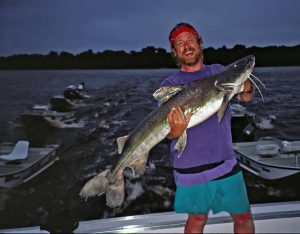
Perhaps the best example came during a trip to Brazil’s Xingu River. Sutton was fishing with accomplished South American angler Ian Sulocki, trying to catch as many different catfish species as possible.
They caught redtail catfish, tiger surubims, duck-billed mandubes and other unusual species. Then they caught something neither man could identify.
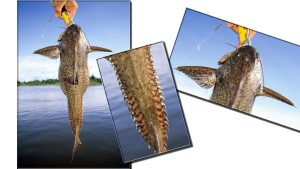
Local guides called it a cuiu-cuiu, named for the sounds it made. The strange, 10-pound armored catfish looked almost prehistoric.
“Its body was covered with bony armor, its fins were lined with needle-sharp serrated spines, and thorn-like projections along its back could easily cut a careless angler,” Sutton said.
When he returned home, Sutton sent photographs to a South American catfish specialist. The response was something he would never forget. He learned it was a previously undescribed species of ripsaw catfish, new to science. That fish became the most memorable catfish of his life.
“I’ve caught larger fish and fought harder battles,” Sutton says, “but it’s not every day you catch a fish that no one has ever formally documented.”
For all his travels, however, Sutton still has plenty of unfinished business. He has never fished for Europe’s legendary wels catfish.
“Maybe someone will invite me to try for the species in the future,” he says.
The Mekong giant catfish also remains on his list. And there are plenty of others: the jau of South America, the goonch of Asian rivers and Africa’s vundu.
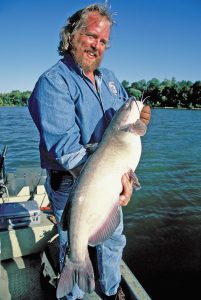
But one destination Sutton has already experienced continues to call him back.
“The Red River in Manitoba, Canada is an extraordinary channel catfish fishery, producing fish that approach 40 pounds,” he says. “It is almost unimaginable to most anglers who pursue channel catfish. Experiencing a fishery like that was unforgettable, and I would love the opportunity to return.”
But perhaps the most important part of Sutton’s story has nothing to do with the size of a fish. He wants anglers to understand what catfish really are.
“Too often, catfish are viewed as simple bottom feeders, but my experiences throughout the Western Hemisphere have shown me that nothing could be further from the truth,” he says. “They are predators. Survivors. Specialists. Creatures that have adapted to an astonishing range of environments.”
And they offer anglers something that goes beyond the possibility of catching a big fish.
“More than anything, I hope anglers understand that catfishing is about much more than catching a big fish,” Sutton says. “It is about exploration, learning and experiencing the natural world.”
That philosophy explains much of what has driven him for more than five decades. The little boy who fished with his grandmother beside Arkansas farm ponds never really disappeared. He simply kept traveling.
“There is always another species to learn about, another place to explore and another reason to appreciate these incredible fish,” he said.
Asked what sort of legacy he wants to leave behind, Sutton doesn’t mention his books or the thousands of miles traveled in pursuit of catfish.
He says, “I hope they remember me less for the fish I caught or the words I wrote and more for the passion behind them. The greatest compliment anyone could give me would be to say that Keith Sutton loved the outdoors and helped others love it, too.”
(Capt. Richard Simms is a retired fishing guide on the Tennessee River and owner of Scenic City Fishing Charters, booking trips for eight other catfish and bass guides. Formerly he was a game warden for the Tennessee Wildlife Resources Agency before becoming a photographer and PR guy for TWRA. That lead to a 30-year career as a broadcast journalist and freelance outdoor writer. Check out his book, “An Outdoor State of Mind.”)
