

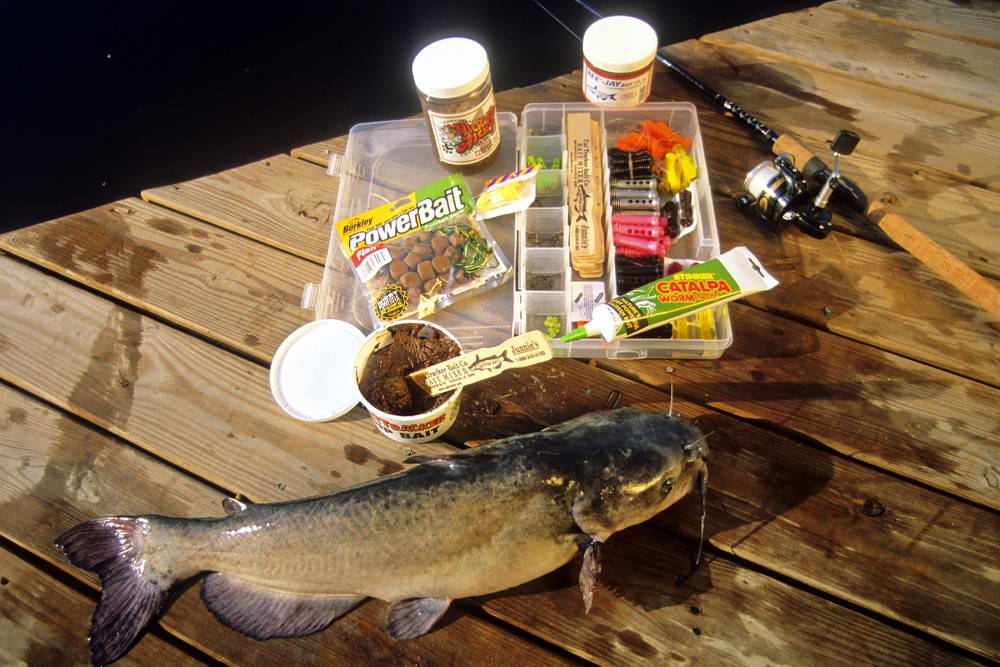
Prepared stinkbaits and doughbaits offer an easy, effective way for beginners
to target catfish using simple gear and straightforward techniques.
Catfish Basics: Best Beginner Catfish Baits (And How to Use Them)
Story and photos by Keith “Catfish” Sutton
One of the first questions new catfish anglers ask is, “What bait should I use?” The good news is that catfish are not picky eaters. Their powerful senses help them find food, even in muddy or dark water, making them easy targets for anglers who use the right bait and present it correctly. For beginners, a few simple bait choices can cover almost every situation and help build confidence on the water.
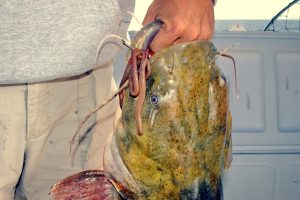
Here are some excellent beginner catfish baits and how to use them effectively.
Night Crawlers (Earthworms)
Night crawlers are one of the easiest and most reliable catfish baits, especially for channel catfish and small flatheads. They are inexpensive, easy to find and work well in ponds, lakes and rivers.
To use night crawlers, thread one or two worms onto a small to medium hook so they dangle naturally. Fish them on the bottom with a slip-sinker rig or under a float in shallow water. Night crawlers are ideal for spring fishing because catfish are active and feeding on natural prey.
Chicken Liver
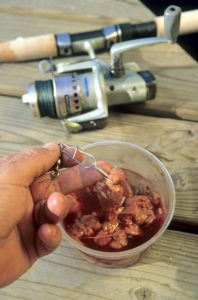
Chicken liver has been a classic catfish bait for generations. Its strong scent spreads quickly through the water and draws catfish in from a distance.
Because liver is soft, it must be hooked carefully. Use a treble hook or wrap the bait with elastic thread to keep it from flying off when you cast. Fish liver on the bottom in slow-moving water or near structure such as fallen trees or channel edges. It works best for channel catfish and smaller blues.
Cut-Bait (Shad or Other Fish)
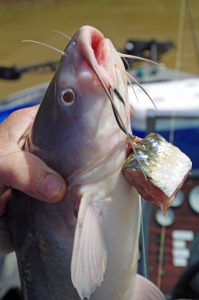
Cut-bait is one of the most productive baits for both channel and blue catfish. It is made by cutting fresh fish—usually shad or other legal baitfish—into chunks or fillets.
Freshness is critical. The stronger the natural scent, the more attractive it is to catfish. Hook the bait once, running the hook completely through and leaving the barb exposed. Cut-bait works best when fished on the bottom near drop-offs, creek channels or current breaks. For beginners, this bait teaches the importance of fishing where catfish travel and feed.
Prepared Stinkbaits and Doughbaits
Prepared stinkbaits and doughbaits are designed to release scent slowly and stay on the hook longer than natural baits. They are especially popular for channel catfish in ponds and small lakes.
Use a sponge hook or treble hook to hold these baits. Dip or mold the bait around the hook and cast gently. These baits work best in warm water when catfish are actively feeding and moving. They are simple to use and require little preparation, making them beginner-friendly.
Hot Dogs, Chicken Breast and Shrimp
Household foods such as hot dogs, chicken breasts and shrimp can also catch catfish. Shrimp and chicken are particularly effective in rivers and reservoirs, while hot dogs work well in ponds.
Cut them into bite-sized pieces and fish them on the bottom. Some anglers soak hot dogs in garlic powder or fish attractant for added scent, but even plain pieces can be productive.
Presentation Matters
No matter which bait you choose, how you present it is just as important as what you use. A basic slip-sinker rig allows catfish to pick up the bait without feeling resistance. Keep baits close to the bottom where catfish feed, and avoid overloading the hook. Smaller baits often work better than large chunks for beginners.
Also remember to match your bait to your target species. Channel catfish prefer worms, liver, chicken and stinkbaits, while blue catfish respond better to cut-bait. Flathead catfish usually prefer live bait and are less beginner-friendly.
Simple Choices, Big Results
For new anglers, success doesn’t require complicated baits or expensive gear. The baits we’ve discussed here will catch catfish almost anywhere. Learning how and where to use these baits builds a foundation that leads to more consistent catches and greater enjoyment on the water. With these basics, any beginner can get started and experience the excitement of catching their first catfish.
(Keith “Catfish” Sutton is a longtime outdoor writer and angler who has spent decades helping beginners learn the fundamentals of fishing. His Catfish Basics column focuses on making catfishing easy, affordable and enjoyable for anglers of all ages.)
