

When catfish won’t bite, a change in bait, location
or depth can turn a quiet day into action.
Catfish Basics: What to Do When Catfish Won’t Bite
By Keith “Catfish” Sutton
Sometimes catfish simply refuse to cooperate. You anchor where they should be, drop the right bait to the right depth and wait. Nothing happens. Minutes turn into an hour and the rods stay still. At that point, many anglers face a decision: pack up and head home or change something to stir the fish into biting. The best choice is almost always to try something different.
The first adjustment is location. Catfish are constantly on the move, especially when water temperature, current or oxygen levels change. If your proven hole is empty today, it may mean the fish have shifted only a short distance. Try moving shallower or deeper, especially along nearby structure such as channel edges, submerged points or the downstream side of a logjam. A move of 50 yards can make the difference between a dead sit and steady action.
If relocating does not help, rethink depth and presentation. Many anglers assume catfish are hugging bottom, but that is not always true. In warm weather, blues and channels often suspend above the bottom following schools of shad. Lift your bait a foot or two off the bottom and give it time. In rivers, try placing baits in slower water just outside the main current instead of directly in the flow. Small changes in where the bait rides can trigger a response from fish that ignored it before.
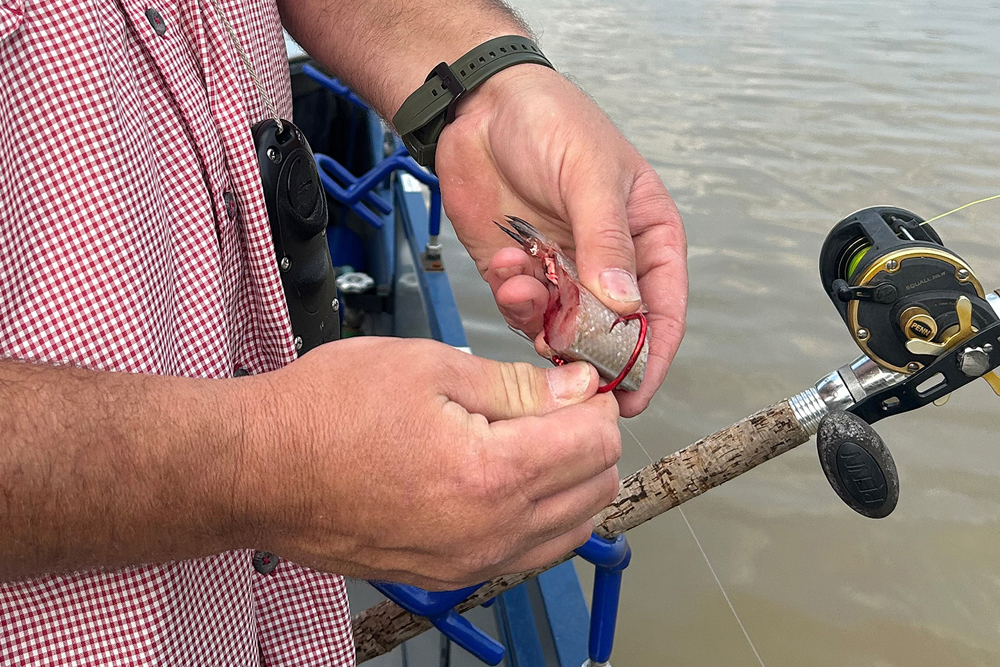
Next, consider your bait. Catfish can be surprisingly picky. If you have been soaking cut bait with no results, switch to live bait or a different scent. Sometimes a fresher piece of bait makes all the difference. Downsizing can help, too. A big chunk of shad looks tempting to a trophy blue cat, but smaller channel cats may shy away from it. A smaller offering can attract more bites and still catch quality fish.
Movement can also be a trigger. When catfish are inactive, a stationary bait may blend into the background. Try drifting with the wind or current to cover water and present your bait to more fish. Even when anchored, you can add motion by slowly reeling in and recasting every 15 minutes. This stirs up scent and shows the bait to new fish that may not have noticed it before.
Noise and disturbance matter more than many anglers realize. Heavy foot traffic, constant casting and banging gear can push fish away in shallow water. If bites stop suddenly, settle down and give the area time to rest. On the other hand, in muddy water or heavy current, a little disturbance can help. Tapping the rod tip or bouncing the sinker along bottom can create vibration that draws curious catfish in.
Weather and light conditions deserve attention, too. A bright, calm afternoon often slows the bite. If that is what you are facing, target shaded banks, deeper holes or areas with wind pushing food into a shoreline. When clouds roll in or evening approaches, be ready. Catfish that seemed nonexistent an hour earlier can suddenly turn aggressive.
Finally, change your mindset from waiting to experimenting. Each slow trip is a chance to learn something new about how fish respond to conditions. Keep mental notes on what did not work and what finally did. Over time, you will build a toolbox of options for stubborn days.
When catfish will not bite, giving up should be the last choice. Move, adjust, experiment and stay flexible. The anglers who catch fish on tough days are usually the ones willing to change their plan instead of sticking with one that clearly is not working.
(Keith “Catfish” Sutton is an outdoor writer and photographer whose work has appeared in magazines across the country for more than 50 years. He specializes in practical fishing advice that helps anglers catch more fish under real-world conditions. He lives in Arkansas and spends much of his time on the water researching new techniques.)
