

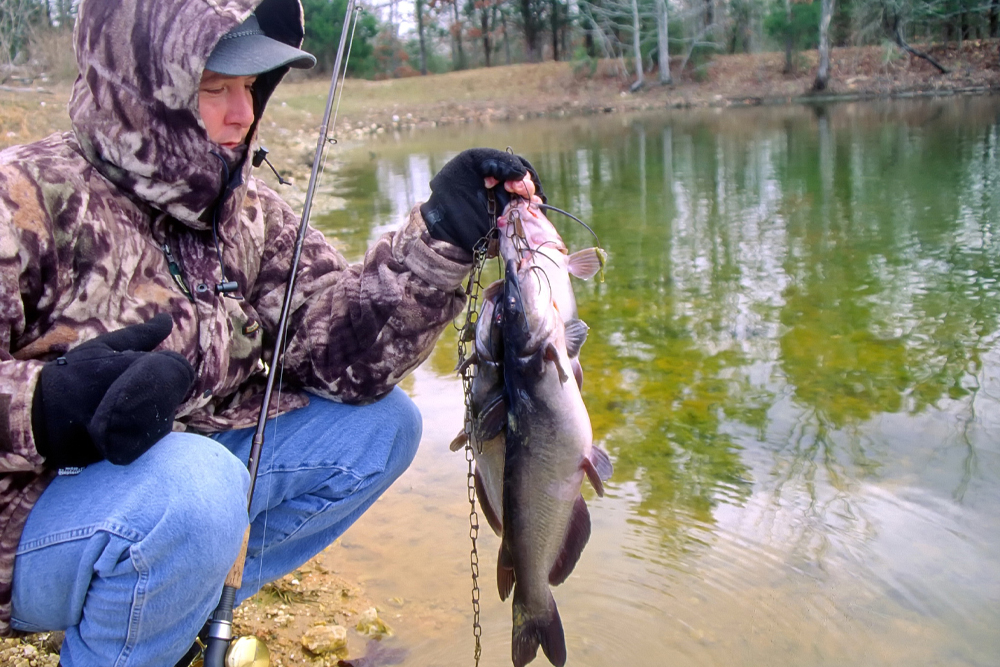
Channel and blue catfish stay active throughout winter. Savvy anglers who dress for cold weather
and visit prime waters can expect to catch several even during the season’s coldest days.
Cold-Water Catfishing Basics
Story and photo by Keith “Catfish” Sutton
For many anglers, winter signals the end of catfishing season. Cold air, chilly water and shorter days convince people to put away rods and reels until spring. What many beginners don’t realize is that catfish don’t stop feeding when water temperatures drop. They simply change where they live and how they feed. With a few basic adjustments, cold-water catfishing can be both productive and enjoyable.
How Cold-Water Changes Catfish Behavior
Catfish are cold-blooded, meaning their activity level slows as water temperatures fall. Instead of roaming widely, they conserve energy by holding in deeper, more stable areas where temperatures change less. Their feeding windows become shorter, but when catfish do feed, they still eat with purpose.
Channel cats and blue cats remain the most active species during winter and are the best targets for beginners. Flathead catfish, however, become largely dormant in winter and are rarely targeted successfully until water warms.
Where to Find Catfish in Winter
Location is the most important factor in cold-water catfishing. In lakes and reservoirs, catfish typically move to deeper holes, creek channels and areas near dam faces where water is more consistent. Look for depth changes rather than shallow flats.
In rivers, winter catfish often gather in deep holes below bends, bridges or current breaks. Areas where the current slows—such as behind wing dams, rock piles or logjams—allow catfish to rest without fighting the flow. These spots can hold multiple fish through the cold months.
Once you find wintering areas, avoid moving too often. Catfish are less likely to chase baits, so putting bait in the right place matters more than covering water.
Cold-Water Bait Choices
Catfish rely heavily on their sense of smell, especially in cold water when visibility is often reduced. Natural baits with strong scent work best. Cut bait from shad or other local forage is a top choice for blue and channel catfish. Fresh bait is especially important in winter, as catfish are less willing to investigate weak odors.
Nightcrawlers remain an excellent option for channel cats, particularly in smaller lakes and rivers. Chicken liver and prepared stinkbaits can still catch fish, but they tend to work better during warming trends rather than during extreme cold snaps.
Use smaller baits than you would in summer. Catfish are feeding, but they are not looking for large meals.
Tackle and Presentation Tips
Keep your rigs simple. A basic slip-sinker rig is ideal for cold-water catfishing because it allows fish to pick up the bait without feeling resistance. Lighter sinkers are often sufficient, especially in slower winter currents.
Patience is key. Winter bites can be subtle, so pay attention to light taps or slow rod-tip movement. Allow the fish time to take the bait, especially when using circle hooks.
Fish during the warmest part of the day whenever possible. Late morning through mid-afternoon often provides the best action, as even a slight increase in water temperature can trigger feeding.
Winter Catfishing Rewards
Cold-water catfishing may not produce fast action, but it can deliver quality fish and peaceful time on the water. Fewer anglers, quieter conditions and the satisfaction of catching catfish when others think it can’t be done make winter fishing especially rewarding. For beginners, learning these cold-water basics builds confidence and extends catfishing enjoyment well beyond the traditional season.
(They don’t call him “Catfish” for nothing. Keith Sutton of Alexander, Arkansas not only serves as editor of CatfishNOW, he’s also the author of Hardcore Catfishing, a 179-page full-color book full of great information. To order an autographed copy, send a check or money order for $22.95 to C&C Outdoor Productions, 15601 Mountain Dr., Alexander, AR 72002.)
