

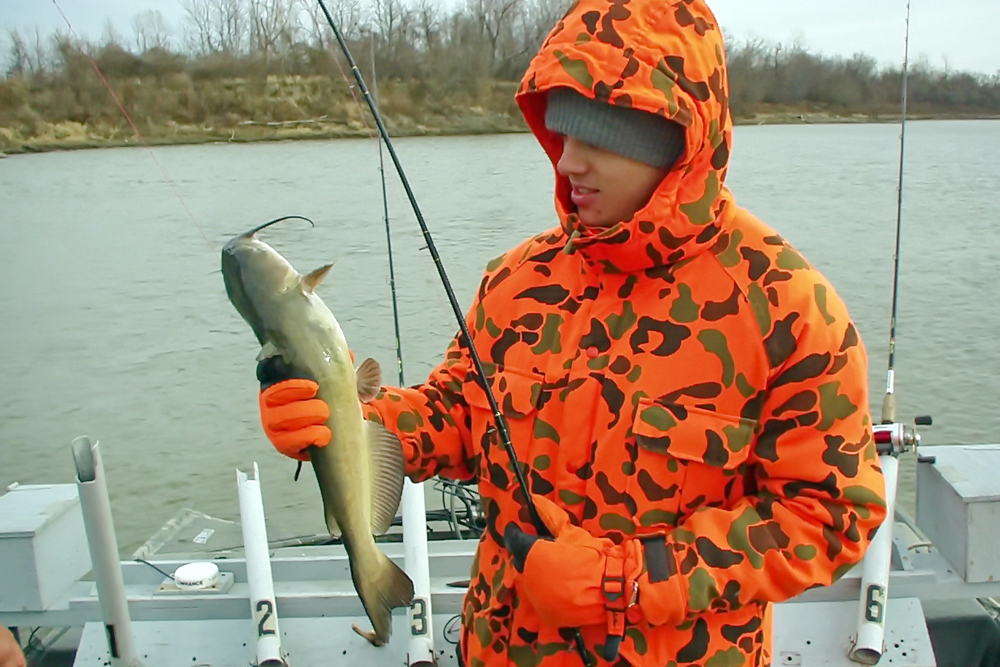
Cold air, hot bite. Ice-out channel cats move shallow and start feeding fast in early spring.
Ice-Out Cats Are Biting!
Source: Iowa Dept. of Natural Resources
The Iowa Dept. of Natural Resources reminds anglers that channel catfish move close to shore and are eager to bite in many lakes and large reservoirs across Iowa just after the ice is gone. The bite starts sooner in southern Iowa impoundments since they lose ice a week or two before northwest Iowa natural lakes.
After eating light during the winter, channel catfish are prone to feed heavily during early spring, cleaning up small fish that died over the winter. Search for actively feeding fish on windblown shorelines, points where dead fish are piled up and shallow areas where the water warms quickly. Keep the wind in your face and move often until you find actively feeding fish.
Use cut-bait or shad sides fished on the bottom. To keep the bait on the hook, try using a 1/0 to 3/0 baitholder hook and enough weight (3/8 to 1/2 ounce) to cast into the wind. Bring along disposable latex gloves to handle the bait and help keep the smell off your hands.
Ice-out catfishing can be good in any lake that has an abundant catfish population. Iowa’s flood control reservoirs—Rathbun, Red Rock, Coralville and Saylorville—usually offer the best action. Anglers may also want to try catfishing in natural lakes, such as Storm Lake, North Twin, Tuttle, East Okoboji, Little Wall Lake or Black Hawk Lake in northwest Iowa soon after the ice is gone. Small impoundments like Don Williams, Big Creek, Volga Lake, Diamond Lake, Mormon Trail Lake, Greenfield City Reservoir and Lake Icaria also offer good early-spring catfishing.
Catfish can be found in almost every body of water across Iowa. Check the state’s weekly fishing report to find out where catfish are biting.
