

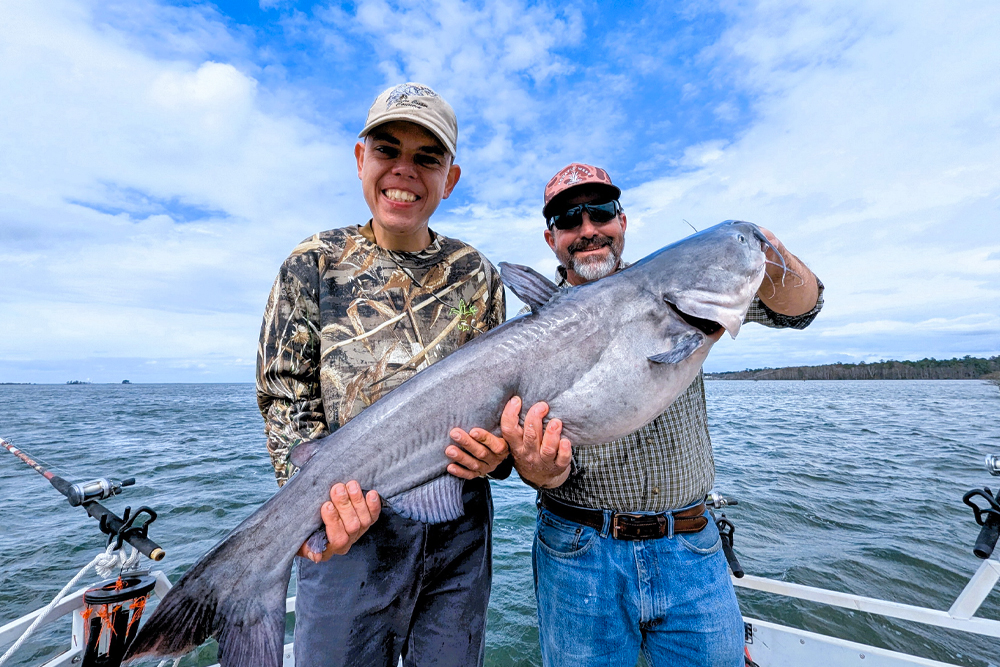
Excellent catfishing is available year-round on lakes
Marion and Moultrie, but tactics change seasonally.
The Santee Cooper Lakes
Story and photos by Terry Madewell
Catfishermen are optimists in the sense that they’re willing to travel to find excellent catfishing opportunities, and many would qualify for card-carrying membership in a “Have Rigs, Will Travel for Catfish” caravan if such a group existed.
The opportunity to catfish in a serene, southern setting where multiple record fish have been caught and filled coolers of eaters are common would tempt any catfisherman to travel. And such a place exists—the Santee Cooper lakes in South Carolina, where quality, quantity and diversity are catfishing hallmarks.
The Santee Cooper system consists of two lakes linked via a seven-mile-long Diversion Canal. Lake Marion, the upper lake, encompasses 110,600 surface acres, while the lower lake, Lake Moultrie, adds 60,400 surface acres to the system. Combined, they provide an unmatched diversity of catfishing options, affording realistic opportunities to hook the catfish of a lifetime.
According to Kevin Davis, from Cross, SC, catfishermen find this world-class catfishing opportunity wrapped in one of the most fishy-looking settings in the world. Davis knows this as truth from many perspectives. He’s a lifetime local angler, a veteran catfish (and multiple species) fishing guide, a former owner of Black’s Camp Resort and a former host of the Santee Cooper Sportsman TV show. He understands the catfishing allure of Santee Cooper.
“One ingredient that attracts catfish anglers to the area is the quality and diversity of catfishing opportunities,” he said. “Some lakes are great for blue catfish, others for flatheads and still others for channel catfish. But a fishery where all three exist, providing quality and quantity catfishing opportunities, is almost sacred.”
Davis (843-312-3080) guides out of Black’s Camp on the Diversion Canal and said all three species of blue, flathead and channel catfish provide strong fisheries.
“The diversity of catfish habitat here is incredible,” Davis said. “In Lake Marion, the upper end is literally swamps, with the Congaree and Wateree rivers combining to form the Santee River. Further down Lake Marion, the water deepens and becomes a massive open-water, stump and tree-filled catfishing paradise. Many trees still poke above the surface, but most are now broken off near the water line. This woody cover habitat is productive, but boaters must use caution while seeking catfish hotspots.”
Lake Moultrie is an open body of water measuring roughly nine miles by eleven miles, filled with humps, drops and channels as catfish targets. The ring of shallow flats around the lake offers fantastic shallow-water catfishing opportunities, with ditches and channels coursing through them, providing travel routes for fish to follow.
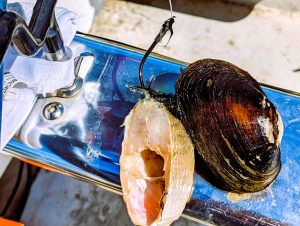
“Many of these shallow flats are home to mussel beds, a prime, year-round catfish feeding opportunity,” Davis said. “The finfish populations of threadfin and gizzard shad are key forages, as are white perch. Seasonally, we have saltwater herring, American shad and menhaden moving into the lakes to spawn. These species travel from the Atlantic Ocean up the rivers, entering the system via the fish lift at St. Stephens from the Santee River and via the locks at Pinopolis Dam on the Cooper River, which impound Lake Moultrie. All these forage species play important roles in the catfishing resource.”
Not to be overlooked in this system is the Diversion Canal linking the two lakes. This waterway attracts forage, and when the current flow is adequate, the forage and catfish flood into this area. It’s also a safe and productive haven for fishermen on windy days. Davis said it forms a unique ecosystem within the larger system.
The Santee Cooper system provides a remarkable diversity and quality of catfish species, with blue catfish the dominant target, flatheads abundant and successfully targeted, and channel catfish flourishing throughout the system.
At different times in recent years, the lakes have held the South Carolina state records for all of the Big Three catfish species.
The current world-record channel catfish, at 58 pounds, was caught from Lake Moultrie in 1964.
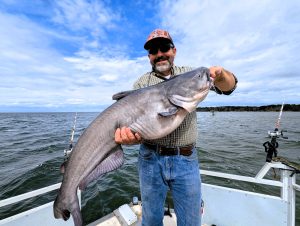
The current rod-and-reel blue catfish state record is 113.8 pounds, caught here in 2017. The current all-tackle state-record blue catfish, caught on a trotline in 2012, tipped the scales at 136 pounds 6 ounces. Blues grow big in this system.
The former state-record flathead catfish, weighing 79 pounds 4 ounces, was caught in the Diversion Canal in 2001 and was broken by a fat flattie weighing 84 pounds 9.6 ounces, caught in the Cooper River, downstream from the Pinopolis Dam impounding Lake Moultrie.
Kevin Davis said the blue and flathead catfish offer world-class fishing for quality fish, and the blues are also found in substantial numbers, with blue-catfish-specific regulations in place, creating an opportunity for anglers to keep plenty for eating, without harming the resource.
The channel catfish population is outstanding, and while the number of giant channel catfish has dwindled, the lakes and Diversion Canal are swarming with this species.
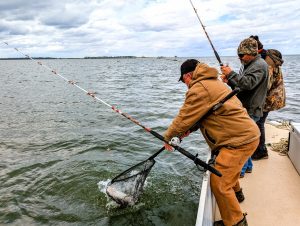
“Fishing from anchored setups, drift fishing with the Santee-Cooper rig first developed here and vertical fishing are all productive,” Davis said. “And during the warmer months, nocturnal fishing the shallow flats from an anchored setup is an awesome adventure. We do encourage CPR (Catch, Photograph, Release) on all big catfish regardless of species ”
The upper end of Lake Marion is a must-fish target with the productive fishing to back up the fishy setting. Chris Biddle with Relaxed Retreat at Carolina King said catfishermen targeting the upper end of Lake Marion can visit a pristine, cypress-tree-studded setting to enjoy great catfishing. Located on the Jack’s Creek inlet of Lake Marion, they offer waterfront cabins, RV sites, a marina store, a boat ramp and boat rentals, with catfishing guides available.
Jane Powell, Executive Director of the Santee Cooper Country Tourist Information Center, said a diversity of local side adventures are available to enjoy when not on the water. Lodging, restaurants and local information are available on the linked website.
Information and purchase options for South Carolina fishing licenses can be obtained online from the South Carolina Department of Natural Resources.
(Terry Madewell of Ridgeway, S.C., has been an outdoor communicator for nearly 50 years. He holds a degree in Wildlife and Fisheries Management and has a long career as a professional wildlife biologist/natural resources manager. He’s passionate about sharing outdoor adventures with others.)
